A Beginner’s Guide to Faucet Cartridges: Ceramic, PTMT, Brass & More
Aesthetics are the primary concern for most people when selecting a faucet. The finish, the shape, and the handle design are the features that capture the interest of consumers the most. However, the majority of homeowners are not aware that faucet performance actually lies in the quality of a small inner part known as the cartridge.
Faucet cartridges control water flow, determine how easy the handle is to turn, and establish the quality of the hot-cold water mixture. An attractive faucet with a substandard cartridge will either leak or become hard to operate in a little while. This blog defines faucet cartridges, describes the types available on the market, and elaborates on the importance of cartridge quality in the long run.
What Are Faucet Cartridges and Why Do They Matter?
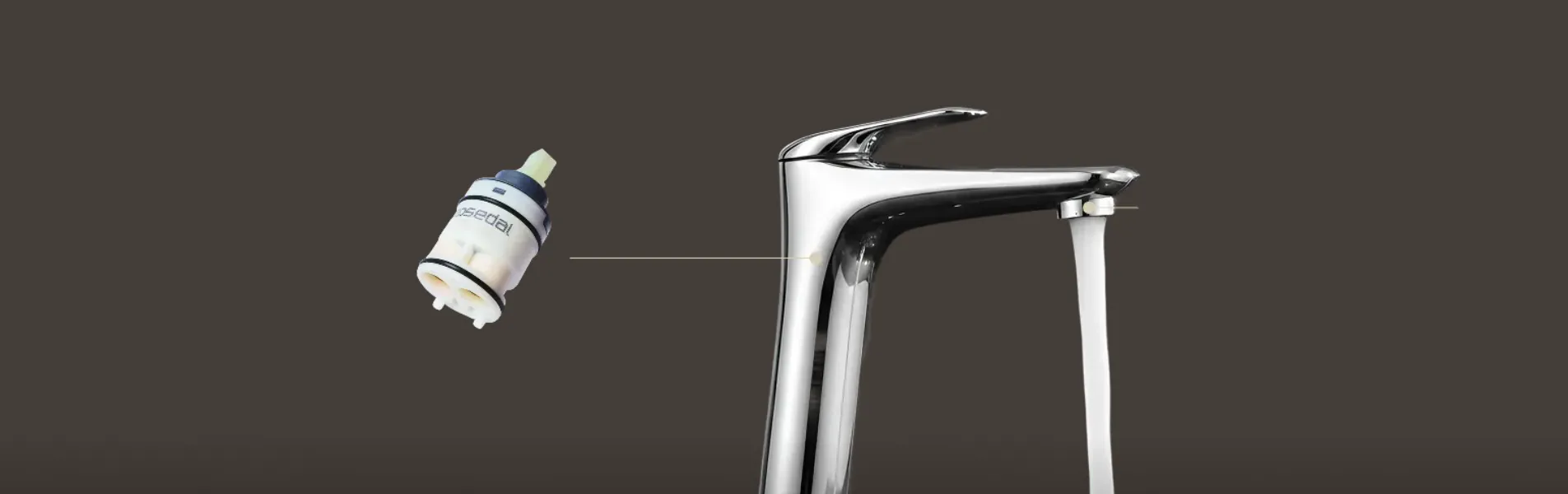
A faucet cartridge is the main part that regulates water flow and temperature in a tap. When you pull the handle, the cartridge either opens or closes the water passage and mixes hot and cold water according to the required temperature.
The cartridge determines:
- The handle’s smoothness
- The stability of the water temperature
- The evenness of the water flow
- The faucet’s lifetime without leaking
Not even the most attractive outer design can hide a bad cartridge. This is why cartridge quality is sometimes more crucial than the faucet’s non-visible parts.
How Cartridge Quality Affects Daily Experience
The quality of the cartridge has a direct impact on the faucet’s feel while it is being used daily. A cartridge that has been made well gives effortless and smooth movement. It provides exact control over the flow and temperature of water.
If you happen to have a low-quality cartridge, you might observe:
- Difficult or uneven handle movement
- Unexpected water temperature changes
- Dripping or leaking after some time
- Early wearing out
A proper cartridge not only increases the comfort level but also minimizes the repair requirement. Furthermore, it enhances the faucet’s safety and makes it more reliable for everyday use.
Types of Faucet Cartridges Explained
The market is flooded with numerous faucet cartridge options. Every cartridge type has a different purpose depending on factors like material, usage, and cost.
Ceramic Cartridges
The ceramic cartridge is the most widely used type of cartridge today. Two ceramic discs are applied to control the water flow, one over the other, and thus the sliding or relative motion of the discs is responsible for the water flow control.
Key features:
- Easy software operation
- Excellent life
- Fallon wear
- Daily occupancy
They cover both the bathroom and kitchen faucets with their usage.
PTMT Cartridges
PTMT cartridges are made from the most advanced plastic. They are small and easy to engineer.
Key features:
- A very economical product
- Adequate for soft use
- Nice working
- A complete range of basic fittings
They are perfectly suitable for guest bathrooms or areas with less traffic.
Brass Cartridges
Brass cartridges are very hard and last long. They are often used in applications that require heavy-duty braking.
Key features:
- High load-bearing capacity
- Very long life
- Fit for continuous use
- Heavier than the rest of the cartridge types
They are mostly found in traditional or commercial installations.
Other Cartridge Variants
Some inexpensive or specialized faucets may use a mix of materials or a simplified cartridge design. The reason behind this is usually the economy, but the smoothness and lifespan of the faucets may not be the same.
Why Spanish Technology Cartridges Stand Out
There are numerous types of ceramic cartridges, but their performances are not the same in every case; thus, the engineering quality becomes apparent in this aspect.
Spanish technological cartridges are characterized by:
- Precision manufacturing at high levels
- Very easy and quiet handle operation
- Hot and cold water mixing with precise accuracy
- Performance that does not fluctuate with varying water pressure
- Operational life extended significantly
The manufacturers of these cartridges target reliable performance even under the condition of frequent daily usage. They are able to minimise the effects of sudden temperature changes and are thus placed as enhancers of comfort in terms of water flow.
That is why JAL faucets come equipped with Spanish technology cartridges. The emphasis is on reliability, safety, and smooth operation across many years, not only initial performance.
How to Choose the Right Faucet Cartridge
The selection of the cartridge is determined by the faucet’s type and location of use. A cartridge suitable for small bathrooms may not be good for a kitchen or a family bathroom that is used repeatedly. Daily knowledge consumption prevents early wear and performance problems.
The following points should be taken into account when choosing a cartridge:
- Frequency of the tap usage: Cartridges are to be selected for high-traffic areas like kitchens and main bathrooms that can bear frequent operation without becoming either rigid or loose.
- Whether it mixes hot and cold water: Mixer taps need cartridges that can handle temperature disruption smoothly and block sudden changes during use.
- Water pressure situation in your house: A house with high or fluctuating water pressure should have cartridges designed to prevent internal damage and keep the flow even.
- Future maintenance demands: An excellent cartridge should need very little attention and deliver consistently over a long time.
In the case of daily use in the bathrooms and kitchens, high-quality ceramic cartridges are generally the best choice. They provide better control and longer life. Premium technology cartridges give longer life and a better user experience, hence they are of greater value, and less frequent replacement is required.
Signs That a Faucet Cartridge Needs Replacement
Cartridges do not fail suddenly. They usually show warning signs before problems become serious. Identifying these signs early helps prevent water wastage and damage to the faucet.
Common signs include:
- Dripping or leaking taps: Continuous dripping often indicates internal wear inside the cartridge.
- Stiff or loose handle movement: If the handle feels hard to turn or moves too freely, the cartridge may be worn.
- Uneven water flow: Inconsistent pressure or sputtering water can signal internal blockages or damage.
- Difficulty maintaining water temperature: Sudden hot or cold bursts are often linked to failing mixer cartridges.
Replacing a worn cartridge at the right time can restore smooth performance, improve comfort, and extend the overall life of the faucet.
Simple Tips to Extend Cartridge Life
Good maintenance plays a big role in keeping cartridges working smoothly for years. Small daily habits can prevent unnecessary stress on internal components.
Follow these basic tips:
- Avoid forcing the handle. Always turn the handle gently to prevent internal damage.
- Clean aerators regularly. Blocked aerators increase pressure inside the cartridge, which can cause early wear.
- Use mild cleaners. Harsh chemicals can damage seals and internal parts.
- Fix leaks early. Small leaks put constant pressure on the cartridge and reduce its lifespan.
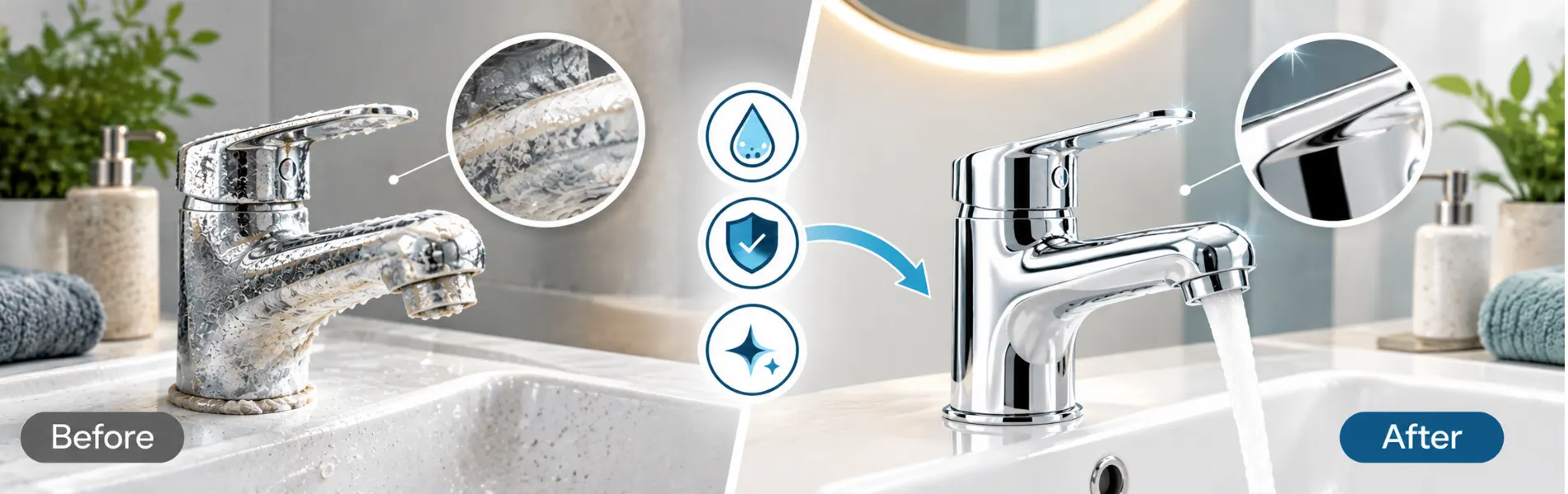
- Check water quality occasionally. Hard water buildup can affect cartridge movement over time.
These simple steps help maintain smooth operation, prevent internal damage, and ensure reliable faucet performance for longer.
Conclusion
Faucet cartridges may be hidden inside the tap, but they play the most important role in how a faucet performs. From smooth handle movement to stable water temperature, everything depends on cartridge quality.
While there are many types of faucet cartridges available, not all are built the same. High-precision options like Spanish technology cartridges offer better control, durability, and comfort. This is JAL rely on them to deliver consistent performance in everyday use.
Understanding faucet cartridges helps you choose fittings that last longer, work better, and feel right every time you turn the tap.