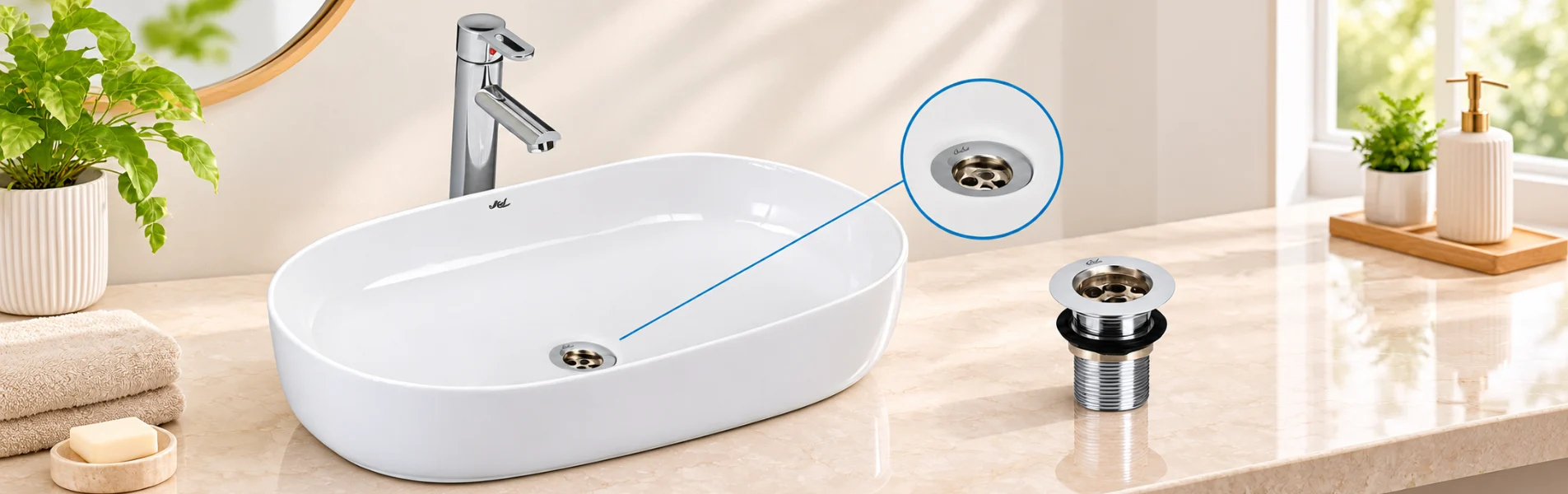
What Is a Slotted Waste Coupling and Which Basin Does It Suit?
A slotted waste coupling is a drain fitting with a small opening near the top. The slot fits into the hole of your basin for the overflow function. The slot allows the overflow of water to escape. However, you only require this kind if your basin is fitted with an overflow function. Otherwise, you will require an unslotted coupling.
Key Takeaways
- A slotted waste coupling is appropriate to be used with a wash basin having an overflow hole.
- The unslotted waste coupling provides a full seal of water for those wash basins that lack an overflow hole.
- At JAL, we offer basin waste coupling options in full thread, half thread, and click-clack styles.
- The only two reliable materials that you can trust are brass and stainless steel.
- Using the wrong type results in leaking joints, not poor drainage.
- The length of the coupling is just as important as the slot itself. Thicker counters need longer couplings.
What Exactly Does a Waste Coupling Do?
A waste coupling is fitted into the drain opening of a wash basin and connects it to the waste pipe. It allows used water to flow out of the basin and into the drainage system. Depending on its design, the coupling may also include a stopper or strainer to help manage drainage and prevent larger debris from entering the pipe.
Why Does the Slot Matter So Much?
Check the rim of your basin carefully before making any purchase. If there is a small opening on the rim, then it is the overflow point. The overflow point prevents the basin from being flooded by water due to an open tap for an extended period. The slotted coupling takes the overflow directly into the drain.
Basins that usually need a slotted coupling include:
- Pedestal basins with a visible overflow slot
- Tabletop basins designed with an overflow channel
- Most traditional ceramic basins sold with existing plumbing
Basins that typically need an unslotted coupling include:
- Countertop and vessel basins with no overflow hole
- Minimalist wall-hung basins designed without overflow
- Some designer basins where the slot would spoil the look
We always suggest checking your basin before ordering anything. A glance under the rim saves a return trip to the shop.
Slotted vs Unslotted: Quick Comparison
| Feature | Slotted Coupling | Unslotted Coupling |
|---|---|---|
| Basin Type | Has an overflow hole | No overflow hole |
| Seal | Designed to allow overflow drainage | Seals the waste opening without an overflow slot |
| Common On | Basins with an overflow, including some pedestal and tabletop basins | Countertop and vessel basins without an overflow |
| Wrong Fit Risk | Overflow drainage may not work correctly if incompatible | Water may leak through the slot if fitted to a basin without an overflow |
What Does JAL's Own Range Look Like?
We ensure our product line is both simple and reliable at Jal Bath Fittings. Our waste couplings are available as full-thread and half-thread types made of either brass or stainless steel material. The full thread type has threads along its entire length, whereas the half thread coupling has one end left smooth. The half-thread types are usually installed in basins that have an overflow water hole.
For basins with an overflow, our 32mm Click Clack waste coupling for basin gives you a neat pop-style plug alongside reliable drainage. It is one of our most requested fittings for modern washbasins.
Which Length Do You Actually Need?
This is where most people get confused, and it has nothing to do with slots.
- 3-inch coupling: fits most standard ceramic basins on a typical countertop.
- 5-inch coupling: needed when your basin sits on thick granite or marble.
Measure from your basin base to the slab below before you order.
Brass or Stainless Steel: Which Should You Choose?
Both have good performance, but they cater to different preferences:
1) The brass one is heavier and has a stronger thread for a permanent and solid fit.
2) The stainless steel one is lighter, does not rust easily, and is relatively cheaper.
Apart from that, we manufacture the ceramic top coupling for those basins that require the cap to blend with the white porcelain.
How Does It Connect to the Rest of Your Plumbing?
Couplings for waste almost never work on their own. They typically connect down to the bottle trap, which contains a small water seal that prevents sewer gas from entering your bathroom. Before tightening any connections when installing a tabletop wash basin, make sure the three items align correctly.
Common Installation Mistakes Worth Avoiding
- Fitting an unslotted coupling under a basin that has an overflow hole
- Choosing a 3-inch coupling when your slab clearly needs a 5-inch one
- Skipping Teflon tape on the threads, which invites slow leaks later
- Overtightening the locknut, which can crack ceramic basins over time
Why Does the Click-Clack Mechanism Sometimes Stick?
This is something that is quite common but doesn’t seem to get explained anywhere else. There is a tendency for hair or soap scum to accumulate on the inside spring. Unscrew the cap by turning it counterclockwise. A quick clean-up should have it working within minutes.
Final Thoughts
Whether you go for slotted or unslotted is a matter of just one simple test. Check your basin rather than your fitting, and everything else will fall into place from there. Make sure that you get the slots right and get the length that corresponds with your slab, and you’re all set.
Want to install your wash basin waste coupling correctly? Explore JAL Bath Fittings’ range of waste couplings and bathroom fittings to find the right products for your basin and installation needs.