Hard Water Problems in Bathroom: How to Protect Your Fixtures
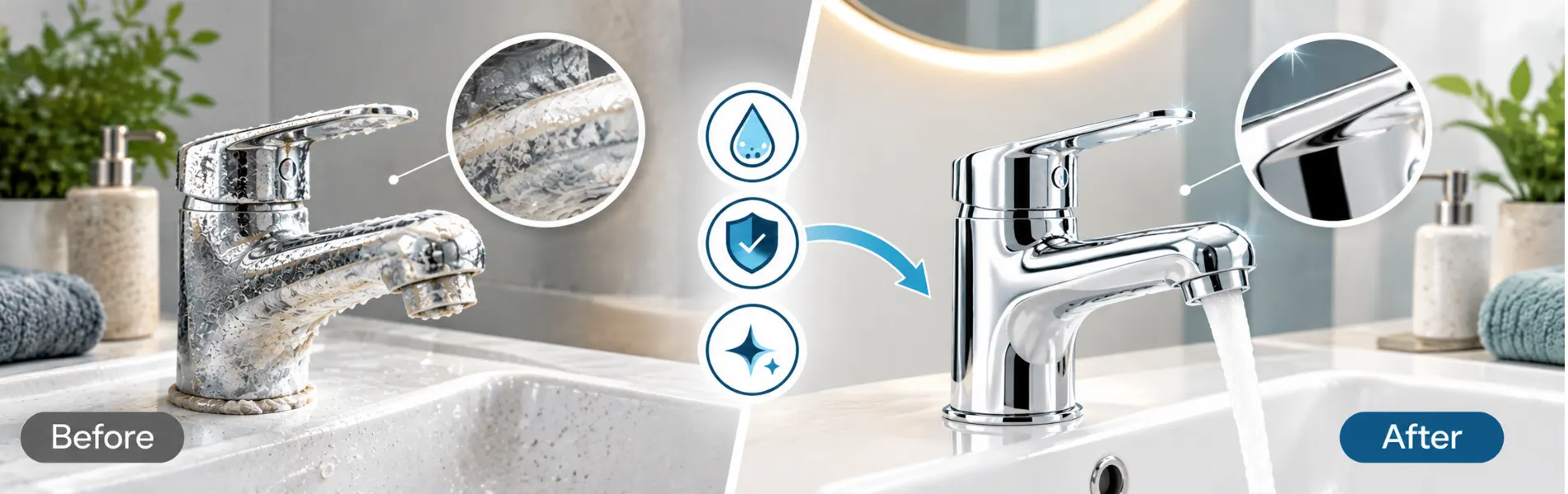
Hard water can harm the fittings in your bathroom without you even noticing. Calcium and magnesium build up as water evaporates and becomes white residue. These deposits may end up clogging your shower heads, reducing the efficiency of your aerators, affecting water flow, and leaving your fixtures looking dull. The good news is that regular cleaning, careful product selection, and proper water treatment can keep your bathroom looking clean and your fittings working well.
Key Takeaways
- Hard water leaves calcium and magnesium deposits on bathroom surfaces.
- Limescale can block aerators, shower nozzles, and faucet openings.
- Regular wiping helps prevent stains from becoming stubborn buildup.
- Vinegar and lemon can help on suitable surfaces, but not on natural stone.
- Softening or filtering water can reduce mineral deposits at the source.
- Stainless steel and properly protected brass can be suitable for hard-water areas.
- Choose cleaners according to the finish and material of your fixture.
- Regular descaling can improve water flow and extend fixture life.
| Hard water is a problem that occurs due to minerals in the water, especially calcium and magnesium. This is what causes stains and scale problems in Indian bathrooms. |
What Are Hard Water Problems in Bathroom?
If you find white residue visible around your taps, if your shower screen is cloudy, or if the flow of your water is decreasing, then hard water could be the culprit.
The minerals remain when hard water evaporates, forming limescale on the surface. This may start out as just a white patch but eventually will become a hard, chalky deposit.
Hard water commonly affects:
- Taps and faucets
- Showerheads
- Aerators
- Mixer fittings
- Wash basins
- Tiles and grout
- Glass shower partitions
- Mirrors
- Geysers and other water-heating appliances
The problem is not only cosmetic. Mineral deposits can collect inside small openings and restrict water flow.
| If your shower spray becomes uneven or your tap flow weakens, check the aerator and shower nozzles for mineral buildup before assuming there is a plumbing problem. |
Hard Water Effects on Bathroom Fittings
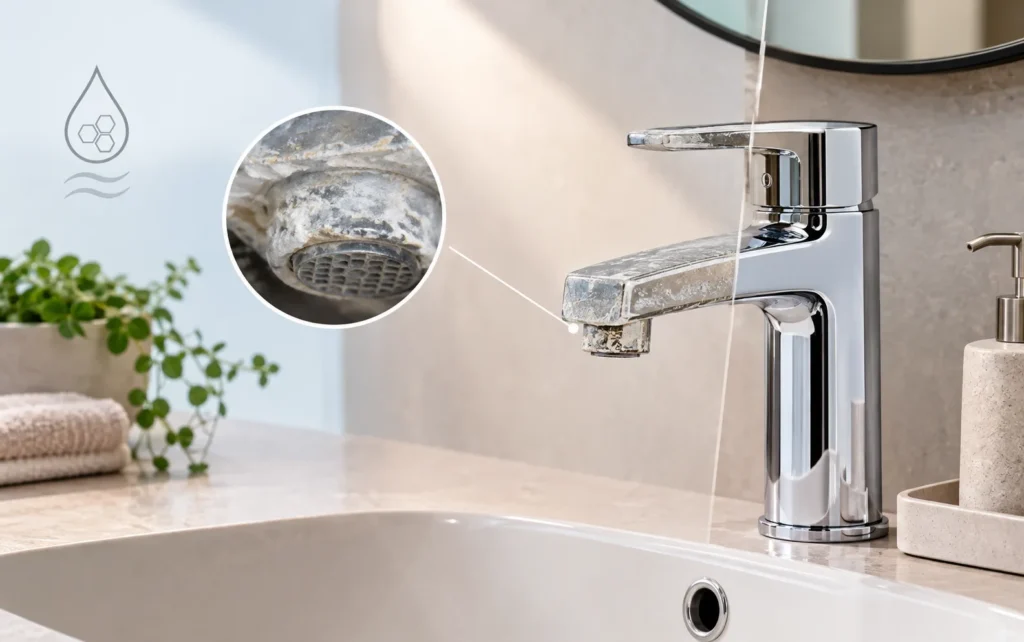
The longer mineral deposits remain, the harder they become to remove.
1. White Stains and Limescale
White or grey marks can make even premium bath fittings look old and poorly maintained. Water droplets that repeatedly dry on the surface leave behind mineral residue.
2. Blocked Aerators and Showerheads
Tiny openings in aerators and showerheads are particularly vulnerable. Limescale can restrict these openings, reducing water flow and changing the spray pattern.
3. Dull and Damaged Finishes
Continuous mineral deposits, aggressive scrubbing, and unsuitable cleaners can affect the appearance of chrome and other finishes.
4. Stained Tiles and Grout
Minerals can settle on tiles and collect around grout lines. Porous grout is especially difficult to keep clean once deposits become established.
5. Appliance Problems
Hard water can also create scale inside hot-water systems. Mineral buildup can reduce efficiency and contribute to maintenance problems over time.
6. Soap Scum Formation
Hard water is not just limited to leaving behind deposits of minerals. Calcium and magnesium in hard water react with soap particles, forming a slimy layer called soap scum.
Such a buildup may accumulate on bathroom surfaces such as tiles, glass doors, bathtubs, and other fixtures. In due course of time, this can make the surface look unattractive and cause difficulty in cleaning because it is very hard to wash away this residue of soap using plain water.
| Hard water damage often starts with appearance, but prolonged buildup can affect water flow, cleaning effort, and the working life of fittings. |
Can Hard Water Also Affect Bathroom Hygiene?
Hard water problems in the bathroom don’t restrict themselves only to stains and limescale. Failure to clean the bathroom can lead to further hygiene problems. The moist surfaces, soapy residues, and minerals in the bathroom can give bacteria a place to reside.
Bathroom bacteria not only occur on easily noticeable surfaces like the floor and toilet seat but also on surfaces where there is frequent touching, like tap handles, sink areas, plugholes, and bathtubs. Some research shows that the bathroom sink contains a great amount of bacteria since it usually stays moist and has organic residues.
Some common bacteria that are seen in bathrooms include E. coli, Streptococcus, and Salmonella. Maintaining proper bathroom hygiene, using suitable disinfectants, and cleaning high-touch areas regularly can help reduce bacterial buildup.
How to Protect Bathroom Fixtures from Hard Water
As soon as you notice hard water problems in bathroom, you must not wait any longer. A simple maintenance routine can make a noticeable difference.
Wipe Fittings After Use
Don’t let water droplets accumulate and dry on taps, shower fixtures, and glass. Wipe these with a soft microfiber cloth.
For shower glass and tiles, a squeegee helps eliminate any water accumulation after bathing. This small step is also helpful in preventing the accumulation of soap scum and minerals on the surfaces. By wiping all the water and soap left behind after each use, you reduce the chances of stubborn deposits forming.
Clean Regularly
A weekly cleaning will go a long way toward preventing mineral build-up from becoming tough-to-remove stains. The aerator and showerhead will require extra care if your water is hard.
This involves removing the aerator or the showerhead where possible, soaking in an appropriate descaling liquid, and scrubbing off any mineral deposits. Cleaning these areas regularly supports better bathroom hygiene and prevents bacteria buildup caused by moisture and residue.
Improve Bathroom Ventilation
Water and wet surfaces complicate cleaning. While taking a shower, run the exhaust fan, and after the shower is finished, keep the exhaust fan on for another 15-20 minutes.
| Small habits count. Wiping a fitting takes seconds instead of removing months of hardened limescale can take considerably more time and effort. |
Home Remedies and Care Tips to Prevent Hard Water Stains
For light deposits, simple household methods can help. Note that only home remedies can help only help with “light deposits” without causing damage to the premium bathroom fittings.
White Vinegar and Water
An equal mixture of white vinegar and water could be used on appropriate surfaces. It should be applied to taps, showerheads, or glass and wiped off in about 5 to 10 minutes.
Lemon
Lemons can help break down mineral buildup from suitable surfaces. Rub it gently on the surface and then wash and dry it.
Baking soda
For stubborn marks, a mixture of baking soda and water may be used in the form of a paste for gentle cleaning purposes.
However, never clean marble, granite, travertine, and other natural stone that reacts to acid with vinegar or any other type of acid-based cleaner. The reason is that acidic agents will ruin the surface. So, always use a suitable pH-neutral cleaner instead.
| Always check the surface before using a home remedy. A solution that removes limescale from chrome can damage natural stone. |
Choose the Right Fittings for Hard Water Areas
The selection of bathroom fittings is crucial, especially if you want to fix all the hard water problems in bathroom.
Stainless steel fittings are resistant to corrosion and easy to clean. Another material, which is also strong enough, is brass, but it requires a special protective coating. Nickel finishes can also offer good wear resistance.
JAL Bath Fittings manufactures high-quality faucets, showers, sanitaryware, and bathroom accessories that are durable and functional. Some of their faucets feature silicone aerator nozzles, which make lime scale easier to wipe off.
When selecting fittings, do not focus only on aesthetics. Take into account the material, finishing, ease of cleaning, and suitability to your local water conditions.
| An excellent fitting, such as from JAL Bath Fittings, can lower maintenance requirements, but no finish is absolutely maintenance-free when water is hard. |
Hard Water Protection: What Works Best?
| Problem | What You May Notice | What You Can Do |
|---|---|---|
| Faucet Stains | White or chalky marks | Wipe regularly and use a suitable descaler |
| Clogged Aerator | Weak or uneven water flow | Remove and clean the aerator |
| Showerhead Scale | Poor spray pattern | Descale and gently brush the nozzles |
| Cloudy Glass | White spots and film | Use a squeegee after showers and clean regularly |
| Stained Grout | Dull or discoloured grout | Clean regularly and seal suitable grout |
| Mineral Buildup | Hard deposits around fittings | Use a surface-safe descaling solution |
| Repeated Scale | Buildup returns quickly | Consider a water softener or suitable filter |
| Finish Deterioration | Dull or damaged appearance | Avoid abrasive tools and unsuitable chemicals |
| Prevention works best when cleaning and water treatment are used together. Removing existing scale without addressing repeated exposure means the deposits can return. |
Can a Home Water Filtration System Help?
If hard water is an ongoing issue in your house, then you should treat hard water at the source to minimise the mineral build-up.
Ion-exchange softeners function by exchanging calcium and magnesium ions with sodium or potassium ions. Whole-house water softeners can come in handy in cases where more than one part of the house requires softening of water. Point-of-use filters might be an alternative if you have a problem at specific faucets and showers.
It’s reasonable to first determine the water hardness before installing any system.
Keep Your Bathroom Fittings Gleaming with JAL CARE
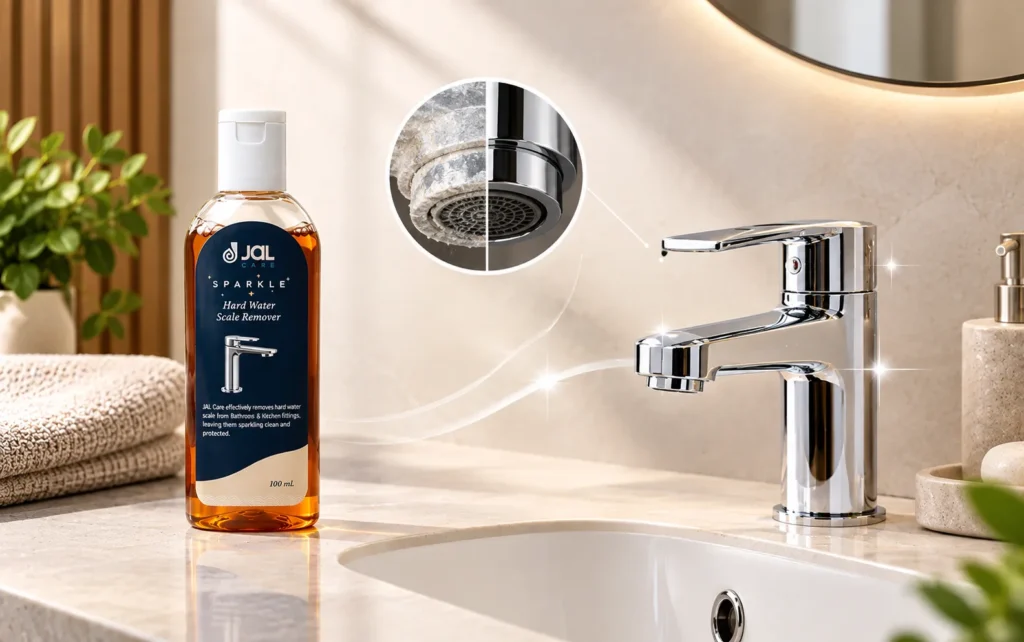
For tough hard water problems in the bathroom, such as limescale buildup, JAL CARE Faucet Cleaner Liquid helps remove scaling and marks from suitable bathroom fixtures.
The product is suitable for use on taps, faucets, showers, mixers, and stainless steel bathroom fixtures. Spray it on the problem area, wait for a few minutes, and then gently wipe or scrub using a soft cloth.
Its purpose is simple – to soften up tough mineral deposits without having to scrub too much. Frequent cleaning can be helpful in preserving the natural look of bathroom fixtures and preventing deposits from getting too hard to clean off
| Always read the label before using any cleaning product. Do not use any abrasive materials that might scratch surfaces. |
Conclusion
Hard water should not negatively affect the appearance or functionality of your bathroom. Clean fittings frequently, descale aerators and shower heads before the scale builds up excessively, use appropriate cleaning solutions, and consider installing water treatment if you notice the formation of scale continuously.
The right premium bath fittings, paired with sensible maintenance, can make everyday bathroom care much easier. With consistent cleaning and suitable bathroom accessories, you can keep your fittings cleaner, shinier, and functional for longer.